A beautiful lamp can completely change the look of a room, but the wrong lampshade can make even an expensive lamp look out of place. Whether you’re replacing an old, damaged shade or refreshing your home décor, finding the right fit involves more than choosing a color you like.
From size and shape to fabric and fitter type, several details determine how a lampshade looks and performs. With so many replacement lamp shades available, knowing what to look for can save you time, money, and the frustration of buying a shade that doesn’t fit.
In this guide, we’ll explain how to measure your lamp, compare popular shade shapes, identify the correct fitter, and select a style that complements your space.
And if you’re in Sandy Springs, Atlanta, or a nearby community, you can bring your lamp to the LED Lighting Center and let our lighting specialists help you find the right shade.
How to Measure Your Lamp for the Right Shade Size
One of the most common mistakes when shopping for replacement lamp shades is choosing a shade that’s too large, too small, or incorrectly positioned.
A properly sized lampshade should complement the lamp base, cover the necessary hardware, and provide balanced lighting.
Start With These Three Measurements
1. Lamp Height
Measure from the bottom of your lamp base to the bottom of the socket assembly, excluding the harp and existing shade.
As a general starting point, a lampshade height of approximately one-third of the lamp base height may create a balanced appearance. However, this proportion varies with the lamp’s design.
2. Lamp Base Width
Measure the widest part of your lamp base.
For many table lamps, choosing a shade with a bottom diameter approximately twice the widest part of the base can be a useful starting point.
3. Lampshade Dimensions
Lampshades are commonly measured using three dimensions:
Top diameter: Width across the upper opening
Bottom diameter: Width across the lower opening
Slant height: Distance along the angled side from top to bottom
For drum or rectangular shades, you may also need the vertical height or depth measurements.
Example: Choosing a Shade for a Table Lamp
Suppose your lamp base is 18 inches tall and 7 inches wide.
You might begin by comparing lampshades approximately 6 inches tall with a bottom width around 14 inches, then adjust based on the lamp’s proportions, harp height, and intended appearance.
These are guidelines rather than fixed rules. Decorative, antique, and unusually shaped lamps often require different proportions.
Expert Tip: Don’t rely on measurements alone. A shade that looks perfect online may sit too high, too low, or look unbalanced once installed. Trying different shades directly on your lamp is often the easiest way to find the right fit.
Understanding Different Lamp Shade Shapes
The shape of your lampshade influences both your lamp’s appearance and how light spreads throughout the room.
Here are some of the most popular options to consider.
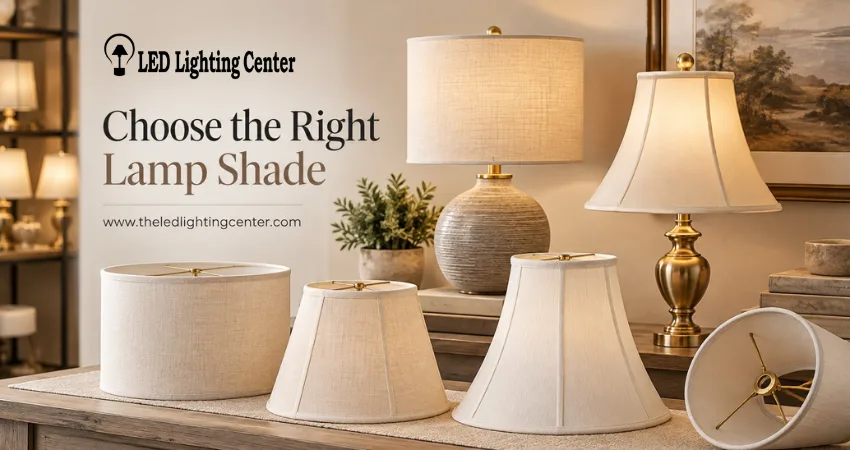
Drum Lamp Shades: A Clean, Modern Look
Drum lamp shades feature a cylindrical design with top and bottom openings of approximately equal diameter.
Their simple, contemporary appearance makes them a popular choice for modern bedrooms, living rooms, and home offices.
Drum shades work particularly well with:
Contemporary table lamps
Mid-century modern lamp bases
Minimalist interiors
Bedside and accent lamps
Their relatively open shape can also help distribute light above and below the shade, depending on the material and construction.
If you’re updating an older lamp with a more contemporary look, a drum shade may be worth considering.
Empire Lamp Shades: A Timeless Choice
Empire lamp shades have a smaller top opening and a wider bottom, creating a tapered silhouette.
This classic design complements traditional lamps, decorative ceramic bases, and many vintage lighting fixtures.
Empire shades are commonly used in living rooms, bedrooms, and formal interiors where a traditional appearance is preferred.
Bell Lamp Shades: Elegant and Traditional
Bell shades feature curved sides that flare outward toward the bottom.
They are often associated with antique lamps, ornate bases, and traditional home décor.
A bell shade can soften the appearance of a decorative lamp while preserving its classic character.
For homeowners restoring an antique or family heirloom, a bell shade may provide a more historically appropriate appearance than a modern drum shade.
Square and Rectangular Lamp Shades: Structured and Stylish
Square and rectangular lampshades are excellent choices for lamps with geometric bases or spaces where a round shade may feel too bulky.
They can work especially well on:
Console tables
Narrow bedside tables
Modern accent lamps
Rectangular ceramic or metal bases
Their structured shape can create a clean, architectural appearance.
Oval Lamp Shades: Ideal for Narrow Spaces
Oval shades offer the visual softness of a round shade while requiring less depth.
They are useful for lamps placed close to walls, on narrow furniture, or in spaces where a wider round shade would extend too far.
Not sure which shape suits your lamp? At LED Lighting Center, you can compare different styles directly against your lamp before making a decision.
What Is a Lamp Shade Fitter, and Why Does It Matter?
You may find a beautiful replacement lampshade with the right dimensions, but it still won’t work if the fitter is incompatible with your lamp.
The fitter is the part of the lampshade that connects it to the lamp or its supporting hardware.
Understanding your fitter type is essential when shopping for replacement lamp shades.
Spider Fitter Lamp Shades
Spider fitter lamp shades are among the most common options for traditional table lamps and floor lamps in the United States.
A spider fitter typically features metal arms extending from the inside of the shade toward a central ring.
That ring rests on top of a lamp harp and is secured with a decorative finial.
The harp is the metal support that surrounds the bulb and holds the shade in position.
Spider fitter shades are commonly found on:
Table lamps
Floor lamps
Traditional decorative lamps
Many vintage-style fixtures
Important: A spider fitter shade generally requires a compatible harp and finial. The harp’s height also determines how high or low the shade sits.
If your new shade looks awkward even though its dimensions are correct, the harp may need adjustment or replacement.
Clip-On Lamp Shades
Clip-on lampshades attach directly to a compatible light bulb using a metal clip.
They are commonly used for smaller accent lamps, chandelier shades, and certain decorative fixtures.
Because the shade is supported by the bulb, the clip must match the bulb’s shape and size.
Not every clip-on shade works with every LED bulb, so compatibility should be checked before purchasing.
Uno Fitter Lamp Shades
An Uno fitter attaches around a compatible lamp socket rather than resting on a harp.
Depending on the design, it may be held in place by a threaded socket ring or another compatible fitting.
Uno fitters are often found on certain floor lamps, bridge lamps, and specialty lighting fixtures.
Because Uno fitter designs vary, it’s important to check the opening size, mounting method, and socket compatibility.
How Do You Identify Your Lamp’s Fitter?
Start by examining how your existing shade attaches to the lamp.
If it rests on a harp and is secured by a finial, you likely have a spider fitter.
If it clips onto the bulb, it’s a clip-on design.
If it attaches directly around the socket, it may use an Uno-style fitter.
For antique or specialty lamps, identifying the fitting can be more complicated.
Rather than ordering a replacement based on appearance alone, bring your lamp or existing shade to a lighting specialist for assistance.
Choosing the Right Lamp Shade Material and Color
The material and color of a lampshade influence more than its appearance. They also affect how much light passes through the shade and the atmosphere it creates.
Linen and Fabric Lamp Shades
Linen and other woven fabric shades can create a soft, welcoming appearance.
Depending on their thickness and lining, they may diffuse light gently and work well in bedrooms, living rooms, and reading areas.
Neutral fabrics such as ivory, beige, and off-white are versatile choices for many interiors.
Silk and Decorative Fabric Shades
Silk and decorative fabric lampshades can add elegance to traditional, antique, and formal lighting.
They may feature pleats, trims, or distinctive textures that complement decorative lamp bases.
These shades can be especially attractive when restoring a vintage lamp or preserving a classic interior design style.
Dark vs. Light Lamp Shades
Light-colored shades generally allow more light to pass through their sides, although the actual result depends on the fabric and lining.
Darker or opaque shades may direct more light upward and downward, creating a focused, atmospheric effect.
For a bedside lamp used for ambient lighting, a softly diffusing shade may be ideal.
For a decorative lamp intended to create a dramatic accent, a darker shade might be more suitable.
Should Your Lamp Shade Match Your Furniture?
Not necessarily.
A lampshade should complement the lamp base and the overall room, but it doesn’t need to match every piece of furniture.
For example, a cream shade can soften a dark metal lamp, while a textured linen shade may add warmth to a simple ceramic base.
Consider your room’s color palette, furniture style, and desired lighting before making a final choice.
Five Common Mistakes to Avoid When Buying Replacement Lamp Shades
Even a beautiful lampshade can be disappointing if it doesn’t fit or function properly.
Here are five mistakes worth avoiding.
Mistake 1: Choosing a Shade That’s Too Small
A shade that’s too narrow may make the lamp look top-heavy or expose the socket and hardware.
Always compare the shade’s proportions with the overall lamp base.
Mistake 2: Ignoring the Fitter Type
A spider fitter shade won’t automatically fit a lamp designed for a clip-on or Uno fitting.
Check the mounting hardware before purchasing.
Mistake 3: Selecting the Wrong Shade Height
A shade that sits too high can expose the bulb and create uncomfortable glare.
One that sits too low may cover decorative parts of the lamp or affect its appearance.
The correct harp and fitter arrangement can make a significant difference.
Mistake 4: Choosing Style Over Function
A dark, heavily lined shade may look beautiful but provide less diffused light than you need.
Think about whether your lamp is primarily for reading, ambient lighting, or decoration.
Mistake 5: Buying Without Checking Compatibility
Photos and product descriptions don’t always tell the full story.
If you’re unsure about measurements, fittings, or proportions, professional assistance can help you avoid purchasing the wrong shade.
Also, always use a bulb that meets the lamp and shade manufacturer’s wattage, clearance, and safety requirements.
Can You Replace a Lamp Shade on an Antique or Vintage Lamp?
Absolutely. In many cases, replacing an old lampshade is one of the simplest ways to refresh an antique or vintage lamp without changing the character of the base.
Over time, shades can become discolored, stained, torn, or damaged.
Others may simply look outdated after a room renovation.
A carefully selected replacement can restore the lamp’s appearance while preserving the qualities that make it special.
However, antique lamps sometimes feature unusual proportions, older hardware, or specialty fitter arrangements.
Searching for Lamp Shades Near Me? Why Shopping Locally Helps
Searching online for “lamp shades near me” is often the first step when you need a replacement.
Online shopping offers convenience, but lampshades can be difficult to evaluate without seeing them on your actual lamp.
Two shades with similar dimensions may look completely different once installed.
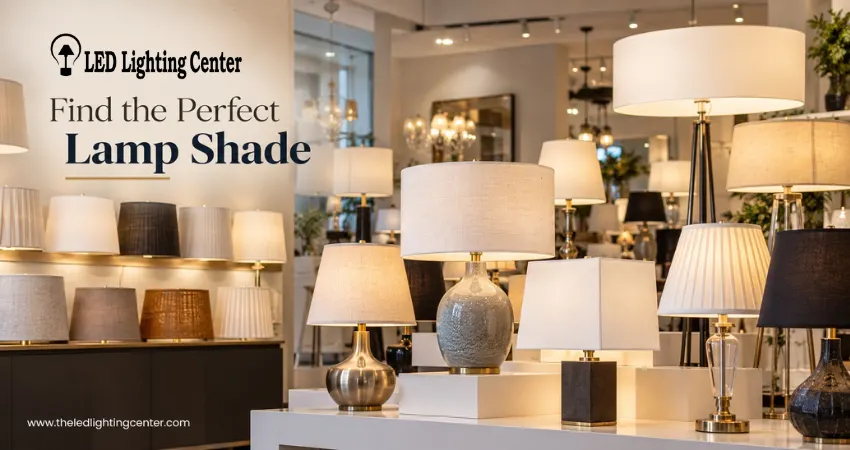
Shopping at a local lighting showroom allows you to compare materials, examine fitter types, and see how different shapes complement your lamp.
Benefits of Visiting a Lamp Shade Showroom
Compare different sizes and shapes. See how drum, empire, bell, and other shade styles change the overall appearance of your lamp.
Check fitter compatibility. Make sure the shade works with your lamp’s socket, harp, and finial.
Explore colors and materials in person. Fabric textures and colors may look different under showroom lighting than they do on a screen.
Get personalized recommendations. An experienced lighting specialist can help narrow down suitable options.
Avoid unnecessary returns. Checking the fit before purchasing reduces the chance of bringing home an incompatible shade.
For homeowners in Sandy Springs, Atlanta, Buckhead, Roswell, Dunwoody, Alpharetta, and nearby Metro Atlanta communities, LED Lighting Center offers in-person assistance with replacement lampshades.
Why Bring Your Lamp to LED Lighting Center in Sandy Springs?
Sometimes, the easiest way to choose the right lampshade is to bring the lamp itself.
At LED Lighting Center, we help customers find replacement lamp shades that complement their existing lighting, whether it’s a modern table lamp, a vintage family heirloom, or a decorative floor lamp.
Our Sandy Springs showroom offers a variety of lampshade shapes, sizes, colors, materials, and fitting options.
Instead of guessing which shade might work, you can compare suitable options with guidance from our lighting team.
What Happens When You Bring Your Lamp?
Step 1: We Examine Your Lamp
Our team looks at your lamp’s size, proportions, design, and existing hardware.
Step 2: We Check the Fitter
We identify the fitting arrangement and review whether your lamp needs a compatible harp, finial, or other accessory.
Step 3: We Compare Replacement Shades
You can explore different shade shapes, sizes, colors, and materials based on your preferences.
Step 4: We Help You Find the Right Fit
We help position compatible shades so you can evaluate how they look on your lamp.
Step 5: You Take Home a Refreshed Lamp
Once you’ve selected a suitable shade, you can enjoy an updated look without replacing the entire lamp.
Whether you want a modern drum shade, a classic bell shade, or a replacement for an antique lamp, our team can help you explore the available options.
Explore Our Lamp Shade Collection
FAQs
Measure your lamp base height and width, then compare those dimensions with the shade’s top width, bottom width, and height. General proportion guidelines can help, but the ideal size depends on the lamp’s design and fitter arrangement.
Yes. Although drum lamp shades are commonly associated with modern interiors, they can also work with some traditional lamp bases. The right choice depends on the lamp’s proportions and overall style.
A spider fitter typically rests on a lamp harp and is secured with a finial. A clip-on shade attaches directly to a compatible bulb. They use different mounting arrangements and are not automatically interchangeable.
Yes. If your lamp is in good working condition, replacing the shade can be a simple and effective way to update its appearance.
You can visit LED Lighting Center at 6136 Roswell Road in Sandy Springs, GA. Our showroom serves customers from Atlanta and nearby communities looking for replacement lamp shades and professional fitting guidance.
Yes. Bringing your lamp makes it easier to check shade proportions, fitting compatibility, hardware requirements, and overall appearance before purchasing.
In many cases, yes. Choose an LED bulb that is compatible with your lamp and shade, and follow the fixture’s electrical ratings and clearance requirements. Bulb shape and size are particularly important for clip-on shades.
Find the Perfect Replacement Lamp Shade at LED Lighting Center
Choosing the right lampshade doesn’t have to be complicated.
By understanding shade measurements, shapes, fitter types, and materials, you can make a more confident decision and give your favorite lamp a refreshed appearance.
But when you’re unsure which option is right, seeing different shades on your actual lamp can make all the difference.
Bring your lamp to LED Lighting Center in Sandy Springs, GA, and let our lighting specialists help you find a shade that fits your lamp and complements your home.